
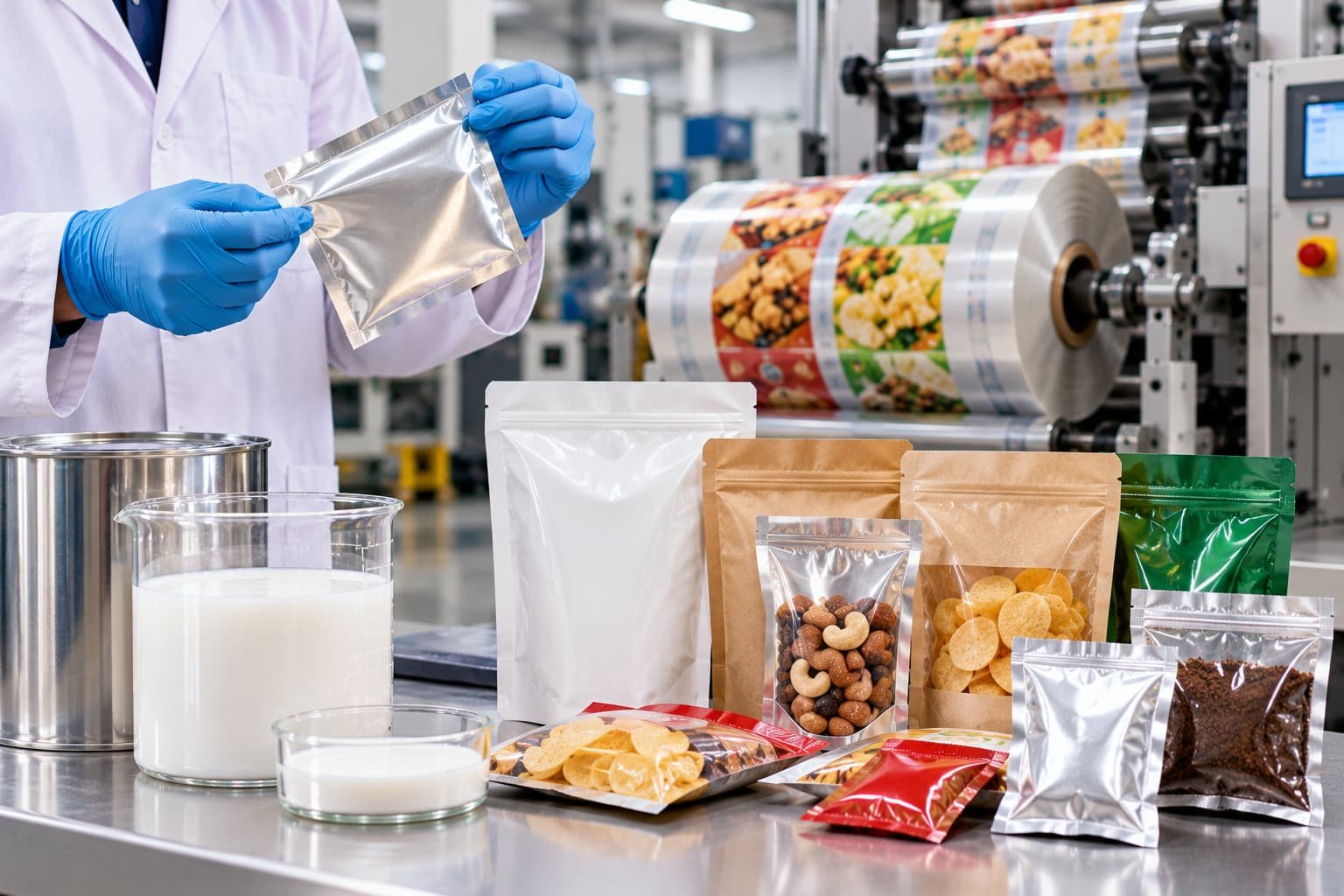
The right heat seal lacquer manufacturers are the ones whose coatings seal properly on your film, on your machine, at your line speed, and who can show test data to prove it. Look for a defined sealing window, seal strength results on your materials, stable batches and a team willing to run line trials with you.
This guide is for packaging manufacturers, converters and quality teams. It explains how a heat seal forms, what controls it, why seals fail, how to test and what to ask a supplier. It also explains where Innokan Technochem’s heat seal coatings fit.
What Heat Seal Lacquer Is and How a Seal Forms
Heat seal lacquer is a coating applied to a film, foil or paper. During packaging, heated jaws press two coated surfaces together. The lacquer softens or activates, wets the opposite surface and then cools into a bond. No separate adhesive is added at the packaging stage.
Innokan describes its heat seal coatings as enabling secure sealing under controlled heat and pressure on films, foils and papers, with activation temperatures from 80°C to 180°C depending on the system. Because activation temperature differs by chemistry, the lacquer must match the sealing equipment.
Heat Seal Lacquer vs Other Coatings and Adhesives
Other packaging coatings solve different problems. UV coatings protect and finish printed surfaces. Release coatings create a non-stick surface for liners. Barrier coatings reduce moisture or oxygen passage. A heat seal lacquer has one main job: form a seal when heat and pressure arrive.
It also differs from a laminating adhesive. Laminating adhesive joins layers permanently during conversion. Heat seal lacquer waits on the surface and bonds later, at the packing line. Some packs use several coatings, with the lacquer only on the sealing face.
Packaging Applications for Heat Seal Coatings
Innokan’s heat seal coatings page lists food packaging such as pouches, lidding films and trays, and pharmaceutical blister packs and foil laminates. It also lists flow wraps and sachets for personal care and consumer goods, multi-layer sealant structures and high-resistance industrial packs.
Each use asks for something different. A snack flow wrap needs fast sealing at low temperature. A blister lid must bond cleanly to a rigid or formed component. An industrial pack may need strong seals that resist handling and transport. Describe the pack, the filling process and the shelf-life target when you brief a manufacturer, so the recommendation fits the real use.
The Sealing Window: Temperature, Dwell Time and Pressure
Three machine settings control seal formation: jaw temperature, dwell time and pressure. ASTM F2029, a standard practice for making laboratory heat seals, treats these as the key variables. It also explains that on high-speed machines, dwell time may be too short for the sealing interface to reach jaw temperature. In that case the web’s thickness and construction also affect how fast heat reaches the seal.
This explains why a lacquer that seals well in a laboratory can disappoint on a fast vertical form-fill-seal line. Ask each supplier for a recommended sealing window and test it at production speed. A wider window gives your operators more room when conditions drift.
Peelable and Permanent Seals
Not every pack should seal the same way. Some packs need a seal the consumer can peel open cleanly, while others need a permanent bond that holds under load. The lacquer chemistry, coat weight and sealing conditions all shift where a pack lands between those two behaviours.
Tell the manufacturer how the pack must open and what it must withstand. Then test both seal strength and the way the seal opens, because a strong seal that tears the film can frustrate users as much as a weak one.
Substrate and Layer Compatibility
Innokan lists PET, PE, paper, aluminium foil and coated laminates as substrates for its heat seal coatings. Compatibility goes beyond the base film. The lacquer must also bond to primers, printing inks and any lamination layers beneath it, and it must resist blocking, which is when coated surfaces stick together in the reel.
Coat weight matters too. Too little gives weak or patchy seals, while too much can slow heat transfer or cause sticking. Test the lacquer with your exact structure, not a similar one.
Why Seals Fail
Weak or inconsistent seals usually trace back to a short list of causes:
- Temperature too low to activate the lacquer, or too high so it degrades or sticks to the jaws.
- Dwell time too short at high line speeds.
- Uneven or insufficient jaw pressure.
- Contamination in the seal area, such as product dust, powder or grease.
- Wrinkles or folds that leave channels for leakage.
- Uneven coat weight or coating defects.
- Poor adhesion between the lacquer and the substrate.
- Incompatible films, inks or layers.
Leakage often starts at folds, gussets or contaminated seal areas rather than in the lacquer itself. A good manufacturer will help you work through these causes before blaming the coating.
Quality Testing and Line Trials
Test seals in two steps. Start in the laboratory. ASTM F88 is the standard test method for seal strength of flexible barrier materials, and ASTM F2029 describes how to prepare laboratory heat seals. Both help compare lacquers under controlled conditions. Seal integrity can also be checked by leak, dye penetration or visual methods, depending on the pack.
Then move to the machine. ASTM F2029 itself notes that additional guidance may be needed to set up sealing conditions on production equipment. Run a line trial at working speed, record the settings and check seals across the shift. Ask the supplier to attend if the line is new to the coating.
Water-Based and Other Coating Systems
Innokan lists four systems of heat seal coatings for flexible packaging. Thermoplastic coatings use polymers such as EVA, PE, PP and PVC for lower temperature sealing. Water-based coatings use acrylics, urethanes or natural latex, give lower VOCs and suit paper-based packs, but dry more slowly and are humidity sensitive. Solvent-based coatings use polyurethanes, acrylics or nitrocellulose and offer fast drying and high bond strength. Acrylate-based coatings give a transparent finish and a wide sealing window.
VOCs are organic compounds that evaporate readily at normal temperatures, and the US EPA notes that some can affect health. Solvent-based lacquers need ventilation and emission controls. Water-based systems lower solvent emissions but need more drying capacity. Choose by performance, then weigh the environmental and drying trade-offs.
How to Evaluate Heat Seal Lacquer Manufacturers in India
Compare manufacturers on evidence:
- A technical data sheet with sealing temperature range, substrates and coat weight guidance.
- Seal strength results on structures similar to yours.
- Willingness to run trials on your line.
- Batch control, certificates of analysis and notice of formulation changes.
- Customization of activation temperature, seal strength and clarity.
- Documents for food or pharmaceutical use, if your pack needs them.
- Lead times, stock and responsive technical support.
Never accept “food safe” or “pharma grade” without the supporting declarations for your market and application. Do not expect any lacquer to guarantee leak-proof or tamper-proof packs, since pack design and process affect those results too.
How Innokan Technochem Fits
Innokan Technochem manufactures heat seal coatings at its facility in Kundli, Sonipat, Haryana. Its heat seal coatings page lists food packaging pouches, lidding films and trays, pharmaceutical blister packs and foil laminates, flow wraps and sachets, multi-layer sealant structures and industrial packaging. It also states that activation temperature, seal strength and coating clarity can be customised. Innokan states that food-safe and pharmaceutical-grade variants are available, so ask for the documentation your application requires.
Innokan’s wider coatings range also includes release and UV coatings, which helps when a pack needs more than one function. Its specialty coatings guide compares the three coating types. Innokan’s R&D page also describes heat seal coatings engineered for enhanced adhesion and temperature resistance.
Choosing Heat Seal Lacquer Manufacturers With Confidence
Strong heat seal lacquer manufacturers earn trust through data and trials. Define your film structure, machine and speed, ask for the sealing window and test results, and run a line trial before you scale. Check batch consistency and documentation as carefully as the first sample.
Packaging manufacturers that want to discuss sealing requirements and suitable coating options can contact Innokan Technochem or email info@innokan.com with their substrates, sealing equipment and target line speed.
Reference Table
| Resource or Topic | Why It Is Relevant | Verified URL |
| Heat Seal Lacquer Manufacturers in India: Get Reliable Sealing Solutions From Innokan | Existing Innokan article that covers coating types, compliance and production speed from a product viewpoint | https://innokan.com/blog/heat-seal-lacquer-manufacturers-in-india-get-reliable-sealing-solutions-from-innokan/ |
| Innokan Research and Development | Describes testing, quality control and the heat seal coating work behind the product range | https://innokan.com/research-development/ |
| Innokan FAQ | Answers general questions about coatings for sustainable packaging and how to choose a coating | https://innokan.com/faq/ |
FAQs
What is heat seal lacquer?
It is a coating on a film, foil or paper that softens under heat and pressure and bonds to the opposite surface as it cools. It forms the seal without a separate adhesive at the packing stage.
How is heat seal lacquer different from other packaging coatings?
UV coatings protect printed surfaces and release coatings give a non-stick surface, while heat seal lacquer forms a seal under heat. It also differs from laminating adhesive, which joins layers during conversion.
What settings affect heat seal quality?
Jaw temperature, dwell time and pressure are the main settings. Substrate, coat weight and line speed also change the result.
Why do heat seals fail or leak?
Common causes include low temperature, short dwell time, uneven pressure, contamination, wrinkles and poor adhesion. Leaks often start at folds or contaminated seal areas.
How do I test heat seal strength?
ASTM F88 is the standard test method for seal strength of flexible barrier materials. Follow lab tests with a line trial at working speed.
How should buyers evaluate heat seal lacquer manufacturers?
Ask for sealing window data, seal strength results on similar structures, batch quality records and line trial support. Confirm any food or pharmaceutical documents for your application.
Which types of heat seal coating does Innokan offer?
Innokan lists thermoplastic, water-based, solvent-based and acrylate-based systems with activation temperatures from 80°C to 180°C. The right type depends on the substrate and equipment.
Are water-based heat seal coatings suitable for all packaging?
No, because they dry more slowly and can be sensitive to humidity. They suit many paper-based packs, but test them on your structure and line.