
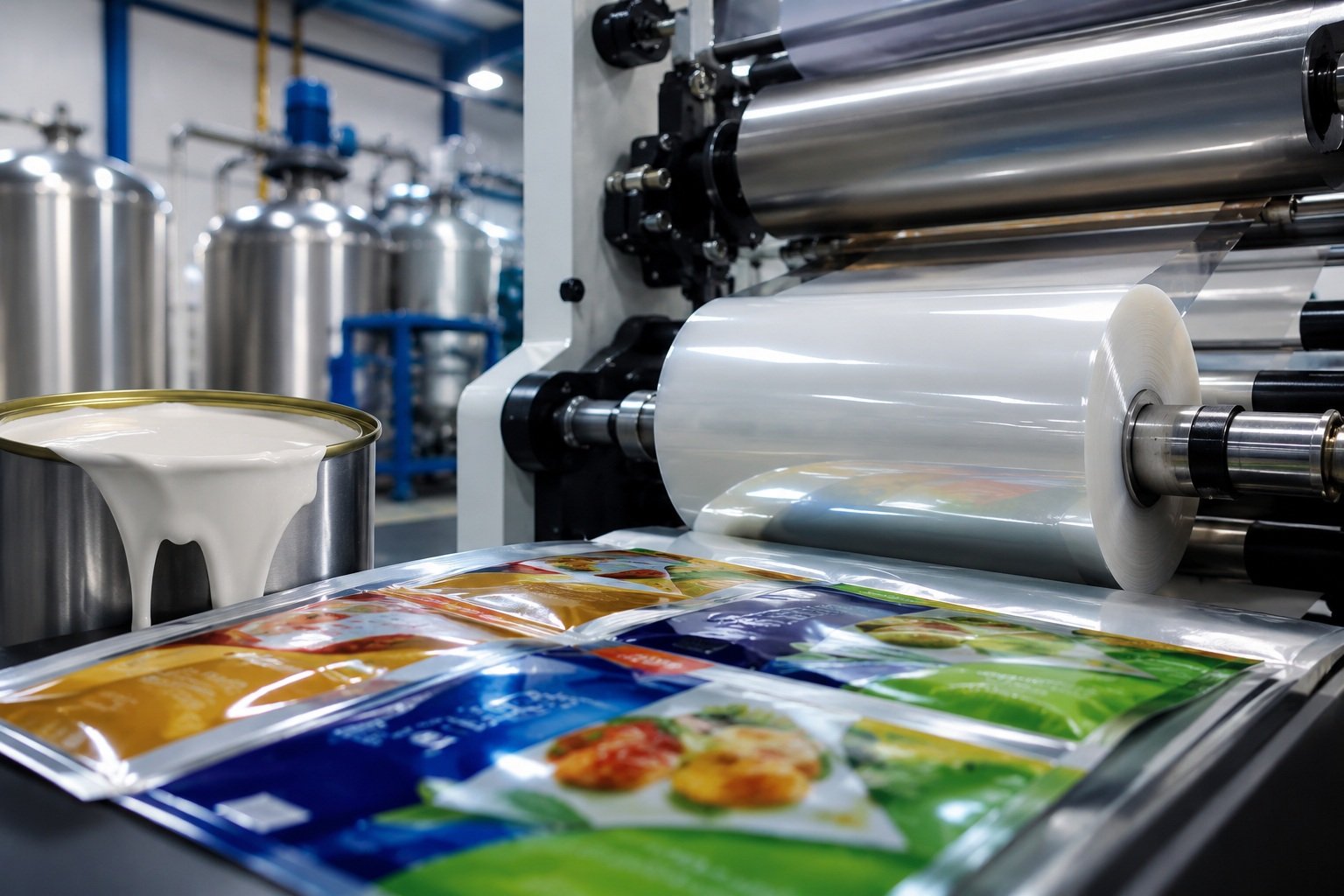
Packaging companies searching for heat seal lacquer manufacturers usually need one thing above everything else: a seal that holds under real production speed without compromising product safety. Innokan Technochem builds its heat seal coatings around this exact requirement, serving food, pharmaceutical, and consumer goods brands across India.
A weak seal can undo months of good packaging design in seconds. Moisture gets in, freshness drops, and returns pile up. This blog explains how heat seal lacquers work, what separates a dependable formulation from a mediocre one, and how Innokan supports packaging teams from sample testing through full production.
What Heat Seal Lacquers Actually Do
Heat seal lacquers are specialized coatings applied to flexible packaging films, foils, and papers. When heat and pressure are applied during packaging, the lacquer melts or activates just enough to bond two surfaces together, creating an airtight closure.
This closure protects contents from moisture, oxygen, grease, and contamination during storage and transport. For food products, this barrier directly affects shelf life. For pharmaceuticals, it protects tablet integrity and dosage safety inside blister packs.
The activation temperature, seal strength, and substrate compatibility all depend on the polymer system used in the lacquer. Getting this formulation wrong creates weak seals, inconsistent sealing across a production line, or packaging that fails during transport.
Types of Heat Seal Coatings Available
Innokan offers four main categories of heat seal coatings, each suited to different packaging needs. Thermoplastic based systems use polymers such as EVA, PE, and PP, offering low temperature sealing that works well for snacks, confectionery, and blister packs.
Water based coatings use acrylics, urethanes, or natural latex, delivering lower VOC output for paper based packaging and food wraps where environmental compliance matters. Solvent based systems built on polyurethanes, acrylics, or nitrocellulose provide fast drying and strong bond strength for heavy duty packaging like medical kits.
Acrylate based coatings offer a transparent finish with high flexibility, making them a common choice for food trays, pharma pouches, and folding cartons. Innokan’s full heat seal coatings range covers activation temperatures between 80°C and 180°C, giving packaging engineers flexibility across different sealing equipment.
Why Substrate Compatibility Matters So Much
A coating that performs perfectly on PET film may behave completely differently on aluminum foil or coated paperboard. This is why substrate compatibility testing should happen before any packaging line commits to a full production run.
Innokan’s formulations are tested across PET, PE, paper, aluminum foil, and coated laminates to confirm consistent seal performance. This matters especially for brands running multiple packaging formats, since switching substrates without retesting the coating can lead to unexpected seal failures on the factory floor.
Packaging engineers should always request substrate specific data before finalizing a coating choice, particularly when moving into export markets with different film specifications than domestic packaging.
Regulatory Compliance for Food and Pharma Packaging
Food safety regulations require heat seal coatings to meet specific migration and contamination thresholds, since the coating sits in direct contact with edible products in many packaging formats. Pharmaceutical packaging carries similarly strict requirements around blister pack integrity and dosage protection.
Innokan formulates food grade and pharmaceutical grade variants specifically to satisfy these compliance needs. This lets packaging converters supply brand owners with documentation proving the coating meets relevant safety standards, which speeds up client approval processes considerably.
Brands entering export markets should confirm whether their target country requires additional certification beyond domestic Indian standards, since compliance requirements can vary between regions.
Balancing Seal Strength With Production Speed
High speed packaging lines cannot afford coatings that require long dwell times to activate properly. Innokan engineers its formulations to strike a workable balance between seal strength and activation speed, supporting automated, high volume production environments.
This becomes especially important for snack food and confectionery manufacturers running continuous form fill seal machines, where even small delays in seal formation slow down the entire packaging line. A coating that seals reliably at lower dwell times reduces machine downtime and improves overall output.
Testing on the client’s actual equipment before scaling production remains the safest way to confirm a coating performs as expected under real line speeds rather than laboratory conditions alone.
Sustainability Considerations in Sealing Coatings
Water based heat seal coatings continue gaining preference among brands prioritizing lower VOC emissions and eco friendly packaging claims. These systems typically require longer drying times than solvent based alternatives, so production planning should account for this difference.
Innokan’s broader coatings portfolio reflects this sustainability focus across release, heat seal, and UV coating lines. For teams also sourcing adhesives alongside coatings, reviewing Innokan’s adhesives range can simplify vendor coordination when a single packaging project requires both bonding and sealing chemistry.
Brands weighing environmental claims against performance requirements often find that modern water based formulations have closed much of the performance gap that once existed compared to solvent based systems.
Choosing Among Heat Seal Lacquer Manufacturers You Can Scale With
Packaging volumes rarely stay flat, so a coating supplier needs the production capacity to scale alongside a growing brand. Innokan operates from its Kundli, Sonipat facility with consistent batch testing procedures designed to maintain quality as order volumes increase.
Technical support during onboarding also matters. A supplier willing to run substrate trials, adjust activation temperature ranges, and troubleshoot line specific issues saves packaging teams significant time compared to working with a purely transactional vendor. Readers exploring related packaging chemistry may also find this overview of specialty coatings for packaging useful for comparing heat seal, release, and UV systems side by side.
If your packaging line needs a dependable heat seal lacquer partner, contact Innokan Technochem to request samples or schedule a technical consultation for your specific substrate and equipment.
Frequently Asked Questions
What is the difference between heat seal lacquer and heat seal coating?
Heat seal lacquer and heat seal coating generally refer to the same category of product, a layer applied to packaging film or foil that bonds under heat and pressure. Some suppliers use lacquer to describe thinner, clear finish formulations, while coating refers more broadly to the entire product category. Innokan’s terminology covers both, spanning thermoplastic, water based, solvent based, and acrylate systems designed for secure, hermetic sealing across flexible packaging formats.
Which industries use heat seal coatings the most?
Food and beverage packaging represents the largest user base, followed closely by pharmaceutical blister packs and foil laminates. Personal care and consumer goods brands also rely on these coatings for flow wraps and sachets. Industrial packaging with high resistance requirements uses heavier duty variants. Each sector selects a coating type based on required seal strength, activation temperature, and regulatory compliance for the packaged contents.
Can heat seal coatings work with existing packaging machinery?
Most heat seal coatings are designed to work within standard activation temperature ranges used by common form fill seal and blister packaging equipment. However, activation temperature, dwell time, and pressure settings should always be tested on the specific machine before full scale production. Innokan’s technical team typically supports this validation process to confirm compatibility before a client commits to bulk ordering.
How do I know which heat seal coating type suits my packaging?
The right choice depends on your substrate material, required seal strength, drying time tolerance, and any regulatory compliance needs such as food safety certification. Packaging engineers should share these details with the manufacturer so formulation recommendations match actual production conditions rather than relying on generic product descriptions alone.
Are eco friendly heat seal coatings as strong as solvent based options?
Modern water based heat seal coatings have significantly closed the performance gap with solvent based systems, particularly for paper based packaging and lower demand sealing applications. Heavy duty or high moisture resistance applications may still favor solvent based or acrylate systems. Discussing your specific performance requirements with the manufacturer helps identify whether an eco friendly option meets your sealing standards.