
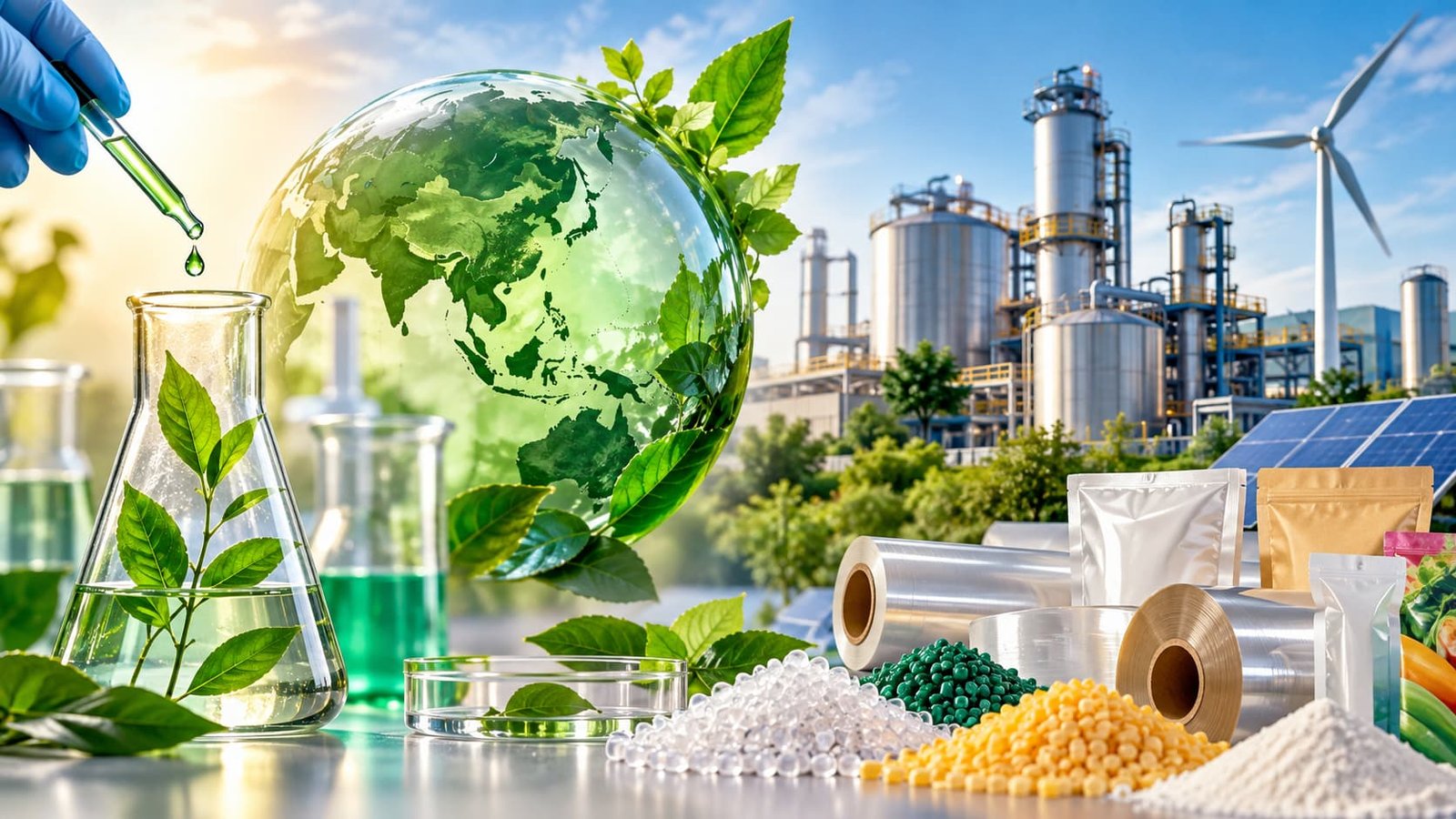
Chemical manufacturers are being asked to solve two problems at the same time: deliver reliable performance and reduce the environmental impact of products and processes. That challenge is changing how industrial chemicals are designed, formulated and manufactured.
Sustainable chemicals go beyond replacing one ingredient with another. They involve looking at material efficiency, emissions, energy use, safety, waste, product performance and end-of-life considerations together. Green chemistry provides a practical framework for making those decisions.
The U.S. Environmental Protection Agency describes green chemistry as the design of chemical products and processes that reduce or eliminate the use or generation of hazardous substances. Its principles cover areas such as waste prevention, safer solvents, energy efficiency, renewable feedstocks and safer product design.
For manufacturers of adhesives, inks, coatings and other specialty chemicals, this shift has direct implications for formulation development.
What Are Sustainable Chemicals?
Sustainable chemicals are chemical products or formulations developed with greater attention to environmental, resource and safety considerations across their lifecycle.
That does not mean every sustainable formulation must be water-based, bio-based or solvent-free. A technically appropriate solution may reduce VOC emissions, lower material consumption, improve process efficiency, reduce waste or extend product life.
The important point is that sustainability should be evaluated against the complete application.
For example, a coating that allows a manufacturer to use less material while maintaining the required barrier performance may provide a meaningful resource-efficiency advantage. Similarly, an adhesive that reduces production waste or improves bonding consistency can contribute to better material utilisation.
The OECD also connects sustainable chemistry with resource efficiency, risk reduction, pollution prevention and lifecycle thinking.
Green Chemistry Turns Sustainability Into a Design Exercise
Green chemistry is particularly important because it focuses on preventing problems at the source rather than simply treating pollution after it has been generated.
The 12 principles of green chemistry include preventing waste, designing safer chemicals, using safer solvents and reaction conditions, increasing energy efficiency, using renewable feedstocks where appropriate and analysing processes in real time to prevent pollution.
For industrial formulators, these principles can influence decisions at several stages.
Raw Material Selection
Formulators can evaluate whether a raw material creates unnecessary hazards, waste or resource consumption.
Formulation Design
The formulation needs to provide the required adhesion, printability, curing, flexibility, durability or barrier performance without unnecessary ingredients.
Manufacturing
Process conditions can influence energy consumption, waste generation and emissions.
Application
A chemical product should perform efficiently under the actual conditions of use, rather than only meeting a laboratory specification.
End of Life
The interaction between a chemical formulation and the final product can affect recycling, separation or disposal considerations.
This is why green chemistry should not be treated simply as a marketing term.
Why VOC Reduction Matters
Volatile organic compounds are an important consideration in many industrial chemical applications.
Solvent-based adhesives and inks, for example, may rely on organic solvents that evaporate during drying. This can provide valuable advantages such as rapid drying and strong adhesion, but it also creates requirements for ventilation, emission control and safe handling.
Water-based technologies can reduce reliance on organic solvents in applications where their performance is suitable. Innokan’s water-based adhesives are positioned around low VOC emissions and applications including paper packaging, labelling, bookbinding and laminating.
The right decision still depends on the substrate, equipment, drying conditions and required performance.
Sustainability therefore involves optimisation rather than simply selecting the technology with the most obvious environmental label.
Performance Cannot Be Separated From Sustainability
A sustainable chemical that fails during production may create additional waste and resource consumption.
Imagine a packaging converter switching to a new adhesive that appears environmentally preferable but dries too slowly for its production line. If the result is slower production, higher reject rates or additional drying energy, the overall sustainability picture becomes more complicated.
The same principle applies to printing inks and coatings.
A formulation needs to meet the technical requirements of the application, including:
- Adhesion
- Drying or curing
- Bond strength
- Flexibility
- Chemical resistance
- Moisture resistance
- Surface compatibility
- Print quality
- Heat resistance
- Process stability
Sustainable chemistry therefore works best when environmental objectives and technical requirements are considered together.
The Role of R&D in Sustainable Chemical Development
R&D is where sustainability goals become practical formulations.
Innokan’s R&D activities cover areas including formulation development, testing, quality assurance, environmental impact analysis and development of adhesives, inks and coatings. Its R&D work includes water-based adhesives, UV-curable inks and heat-seal coatings.
This type of development is important because chemical performance is application-specific.
A packaging film may require different adhesion characteristics from a paperboard carton. A high-speed printing operation may require a different drying profile from a low-speed application. A coating used for protection may need different resistance properties from a coating designed primarily for release.
R&D allows these variables to be evaluated systematically.
Where Sustainable Chemistry Is Making a Difference
Packaging
Packaging manufacturers increasingly evaluate adhesives, inks and coatings alongside substrate selection and recyclability considerations.
Water-based adhesives can support applications involving paper, board and laminates, while specialty coatings can provide sealing, release or surface functionality.
Printing
Ink selection influences print quality, drying, adhesion and environmental management. Innokan offers water-based, solvent-based and UV-curable ink categories for different printing requirements.
Explore Innokan’s printing ink solutions to understand the different technologies available for industrial printing applications.
Construction
Construction applications often demand strong bonding and resistance to environmental stress. Here, durability and service life can become important sustainability factors because longer-lasting assemblies can reduce replacement requirements.
Plastics and Advanced Materials
Specialty chemical formulations can influence surface performance, bonding and protection across polymeric and composite materials.
The Challenges of Moving Toward Sustainable Formulations
Transitioning to more sustainable chemistry is not always straightforward.
Manufacturers may face:
- Existing equipment limitations
- Different drying requirements
- Raw material availability
- Qualification timelines
- Regulatory requirements
- Customer specifications
- Cost pressures
- Performance trade-offs
- Supply-chain consistency
A formulation change may also require changes in process parameters.
For that reason, manufacturers should evaluate sustainability initiatives using actual production data rather than assumptions.
How Manufacturers Can Evaluate a Sustainable Chemical
A useful evaluation framework includes five questions:
- What technical problem must the chemical solve?
- Which environmental or safety issue is the current system creating?
- Can the new formulation reduce that impact without compromising performance?
- What changes are required on the production line?
- What happens across the product’s lifecycle?
This approach helps procurement, R&D and production teams make decisions based on evidence rather than labels.
Where Innokan Fits
Innokan positions its chemical portfolio around adhesives, inks, coatings, resins, binders and related sustainable chemical solutions. Its broader portfolio covers packaging, printing, construction, plastics, rubber and advanced-material applications.
Its R&D approach is particularly relevant when a standard formulation does not fully match an application’s requirements.
For manufacturers evaluating a new adhesive, ink or coating, the practical starting point is the application itself: substrate, process, performance target and sustainability objective.
Final Takeaway
The future of sustainable chemicals will not be defined by one technology. It will be shaped by better formulation decisions, improved process efficiency, safer chemistry, lifecycle thinking and continued R&D.
Green chemistry provides the design principles. Industrial R&D turns those principles into usable products.
For manufacturers, the goal is not simply to choose a chemical labelled sustainable. It is to identify a formulation that delivers the required technical performance while reducing unnecessary environmental and resource impacts.
Innokan’s focus on adhesives, inks, coatings and R&D provides one route for manufacturers looking to explore that balance.
Looking for Sustainable Chemical Solutions?
Choosing the right adhesive, ink or coating requires more than comparing product labels. The formulation must match your substrate, production process, performance requirements and sustainability objectives.
Explore Innokan’s chemical solutions and connect with the team to discuss your application requirements.
Explore Adhesives |
Explore Inks |
Explore Coatings |
Explore R&D
Frequently Asked Questions About Sustainable Chemicals
What are sustainable chemicals?
They are chemical products designed with greater attention to resource use, safety, emissions, waste and lifecycle impact while maintaining required performance.
What is green chemistry?
Green chemistry focuses on designing chemical products and processes that reduce or eliminate hazardous substances and pollution at the source.
Does sustainable chemistry always mean using water-based products?
No. Sustainability depends on the complete formulation, application, process conditions and lifecycle.
How can green chemistry reduce industrial waste?
It emphasises waste prevention, efficient material use and process design that avoids unnecessary by-products.
Why is R&D important for sustainable chemicals?
R&D helps manufacturers balance environmental objectives with adhesion, durability, drying, curing and other technical requirements.
Can sustainable chemicals improve production efficiency?
They can when formulation and process changes reduce waste, energy demand, downtime or material consumption.
What industries use sustainable chemical solutions?
Applications span packaging, printing, construction, plastics, rubber and advanced materials.
How can a manufacturer evaluate a sustainable chemical?
Compare technical performance, process requirements, emissions, material use, safety, cost and lifecycle considerations against the existing solution.